Pancakes, in song

How should we live together?

Three playlists about institutions and the lives inside them: what they must protect, what they are for, and what happens when ideals become systems.

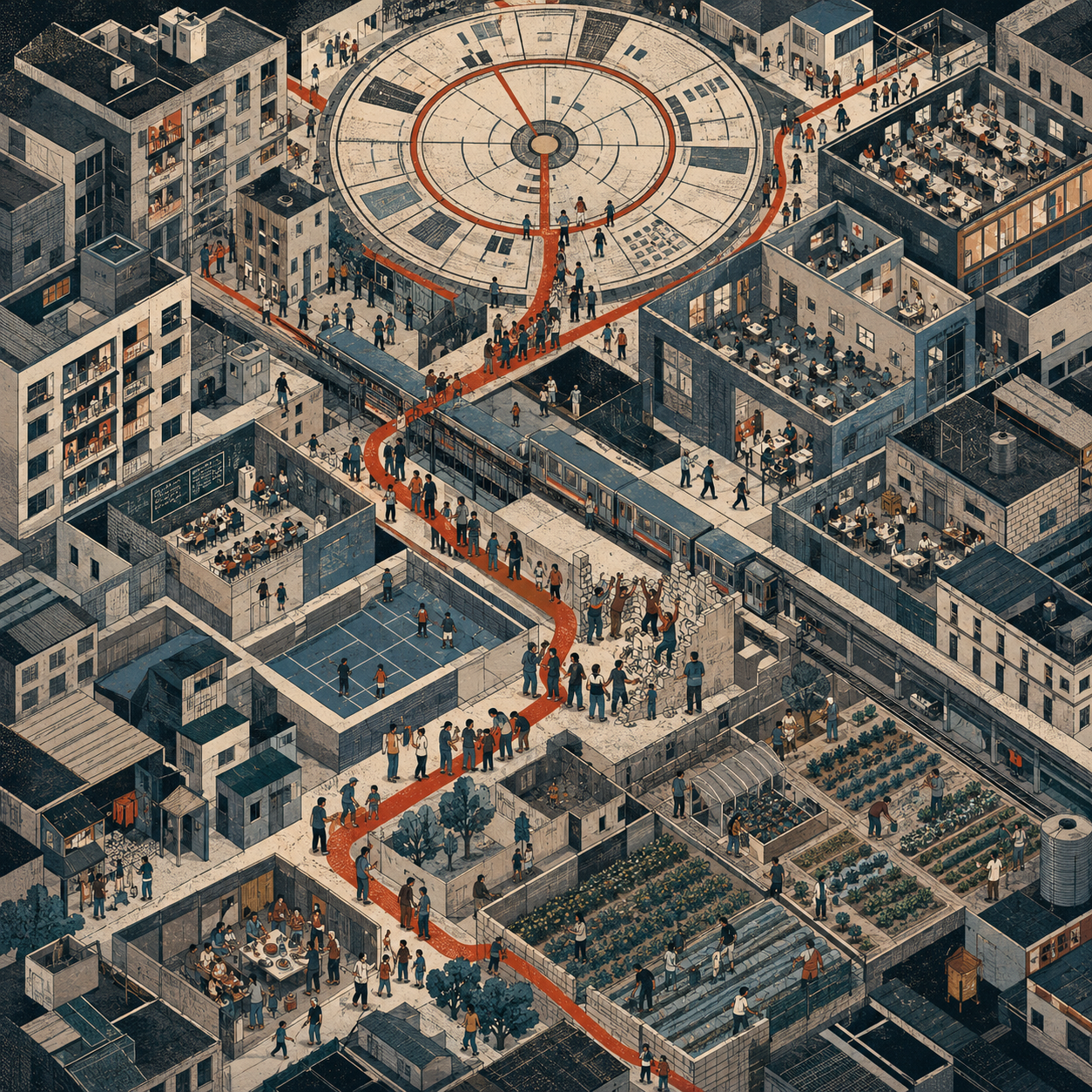
An overhead city scene showing transit, homes, workplaces, gardens, gathering places, and a red path connecting them.

v1 · Requirements

What institutions must protect

Listen to institutional failure closely enough and it begins to tell you what institutions owe the people living inside them.

The first playlist listens from below: to labour, coercive care, exclusion, poverty, escape, stewardship, personhood, and belonging. Lived injuries become requirements. Share power. Recognize hidden work. Protect people and place. Leave room for home, dignity, joy, and enough bread.
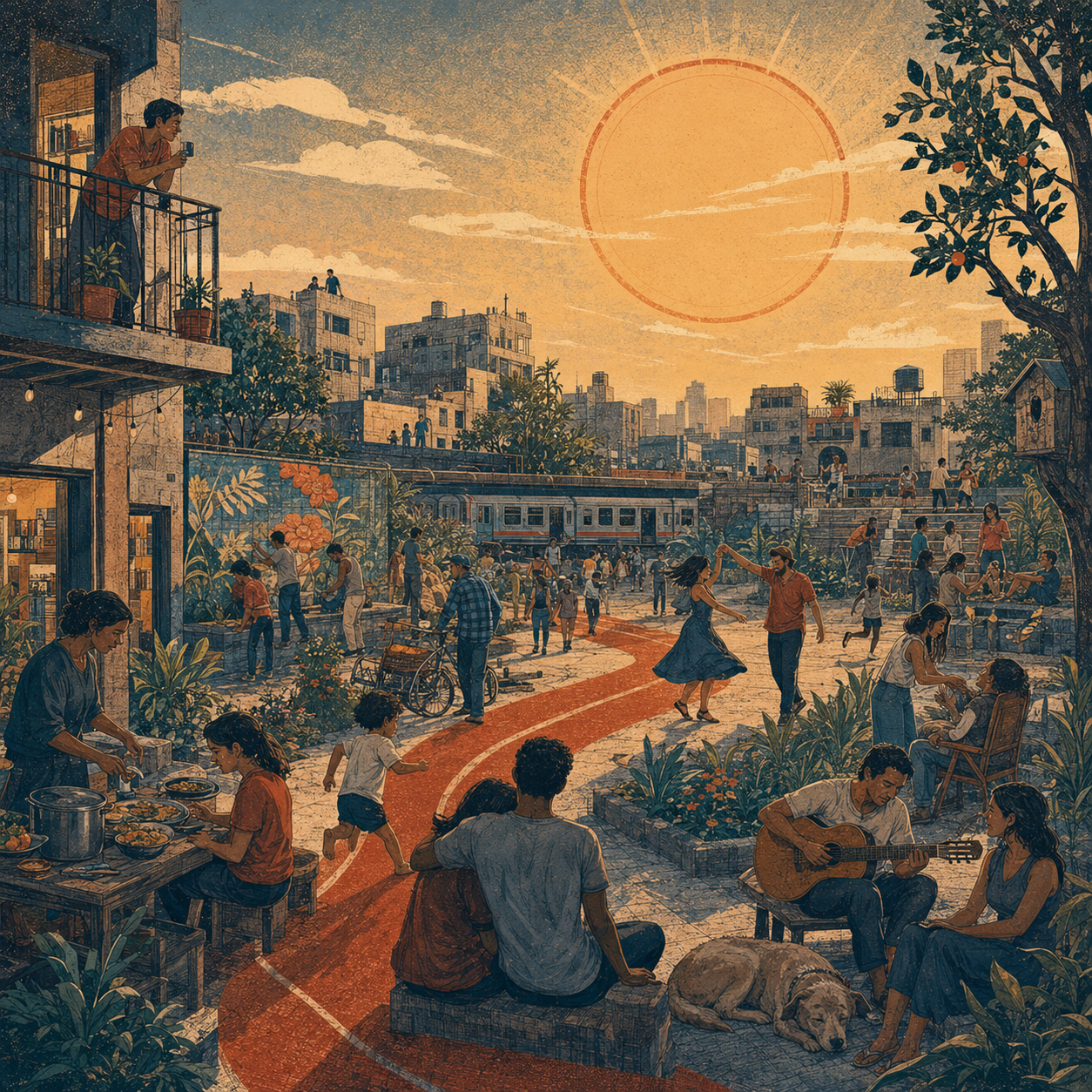
A lively neighborhood at human scale with food, gardens, transit, dancing, music, children, neighbors, and warm evening light.

v2 · Purpose

What civilization is for

Better institutions are not the destination. They are the conditions under which people get to have lives.

Power, markets, technology, and politics matter because ordinary people should be able to live ordinary lives extraordinarily well: stay up late, walk away, dance together, tell stories, care for one another, come home, watch the sunrise, and celebrate while they can.

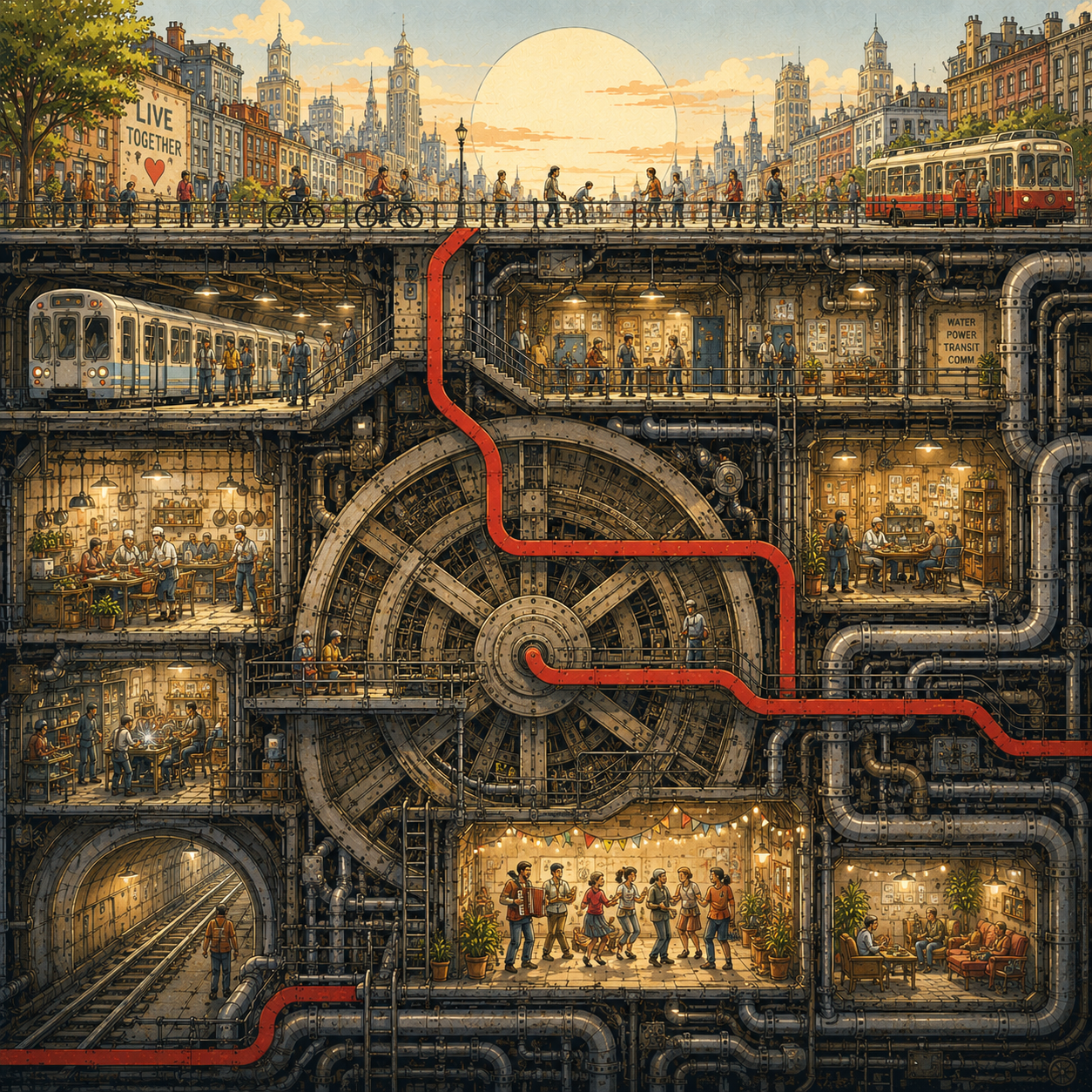
A cutaway city full of transit, workplaces, machinery, pipes, gathering spaces, and people living inside the systems they operate.

v3 · Operation

What systems become

An ideal enters history and becomes a system. Then the system changes the people inside it, and they begin changing it back.

Ideas become rules, roles, habits, incentives, interfaces, architecture, schedules, and expectations. Those arrangements teach, reward, exhaust, exclude, preserve, and transform. People comply, withdraw, improvise, resist, reinterpret, and keep enough humanity alive to make another transformation possible.

One evolving argument

Requirements. Purpose. Operation.

v1 begins with consequences and turns them into demands. v2 asks what those demands are ultimately meant to make possible. v3 enters the machinery between principle and outcome, where ideals become operating systems and operating systems reshape the people inside them. Together the playlists ask not only what institutions should be, but how to keep them worthy of the lives they exist to support.